3D Printed Rocket Engine Successfully Tested by Agnikul Cosmos
Introduction to Agnikul’s 3D Printed Rocket Engine
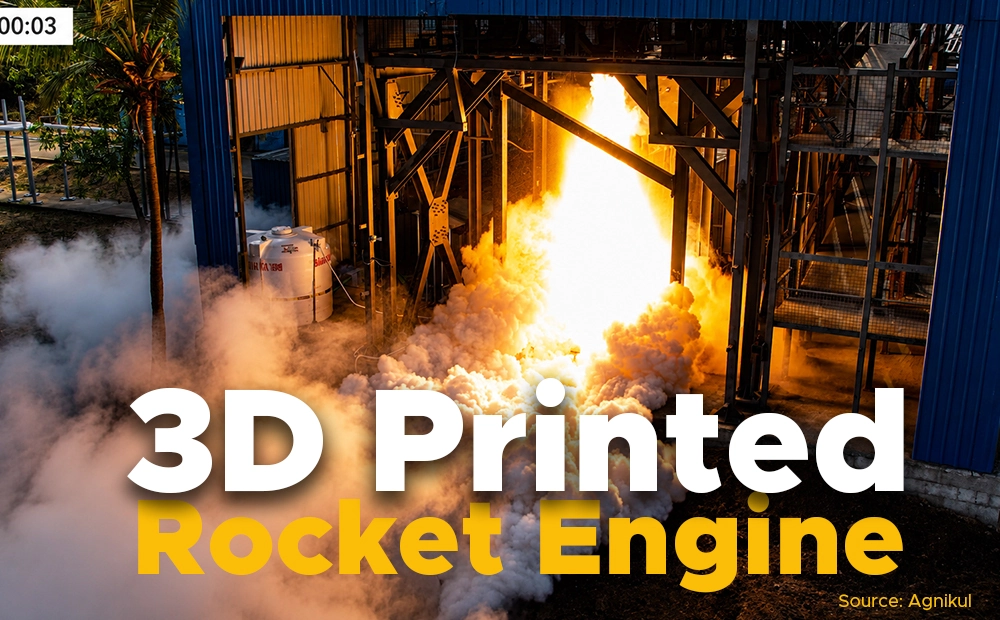
3D printed rocket engines are becoming an important part of modern aerospace manufacturing, and Indian startup Agnikul Cosmos has now successfully tested its Agnite engine. The company performed a 77-second hot-fire test of the engine in Chennai. This is an important achievement for India’s private space industry and also for the global 3D printing industry.
The Agnite engine is special because it is made using industrial metal 3D printing. The engine is also built as a single-piece structure. This means many traditional parts, welds, joints, and assembly steps are removed from the engine manufacturing process.
For many years, 3D printing was mainly seen as a technology for prototypes, models, and small parts. Now, companies like Agnikul Cosmos are showing that 3D printing can also be used for serious aerospace hardware. A rocket engine is one of the most difficult products to manufacture because it must survive extreme heat, high pressure, and vibration.
What is the Agnite engine?
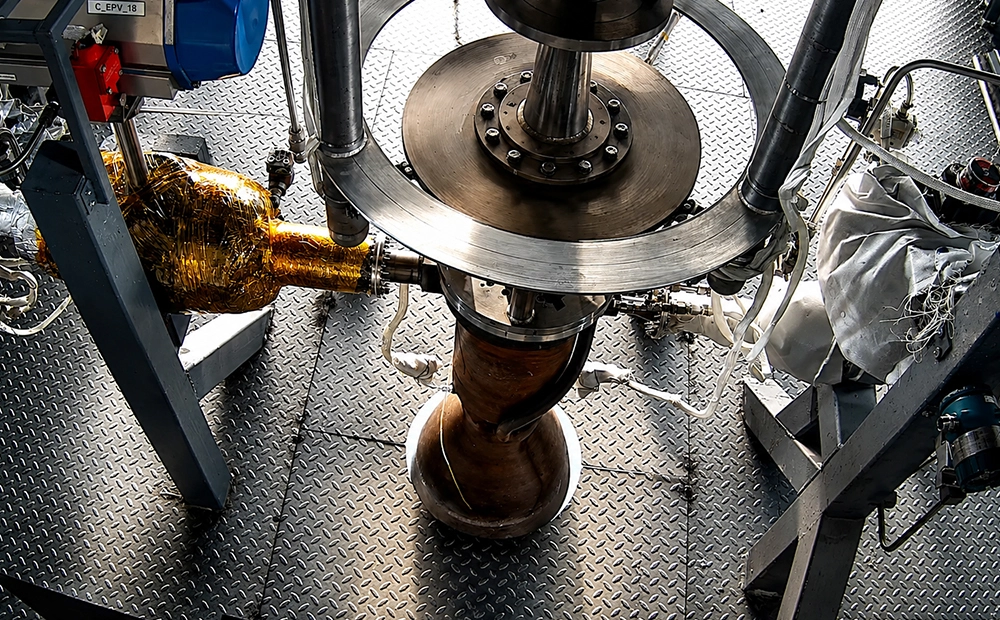
Agnite is a semi-cryogenic rocket engine developed by Agnikul Cosmos. It is designed for the company’s Agnibaan launch vehicle, which is being built to serve the small satellite launch market.
The engine is reported as a large single-piece 3D-printed rocket engine. It is made from Inconel, a high-performance metal alloy used in aerospace and high-temperature engineering applications.
The important point is not only that Agnikul used 3D printing. The stronger point is that the company used 3D printing to simplify how rocket engines are made. Instead of manufacturing many separate parts and joining them together, the engine can be produced as one integrated structure.
What did Agnikul test and what output did they get?
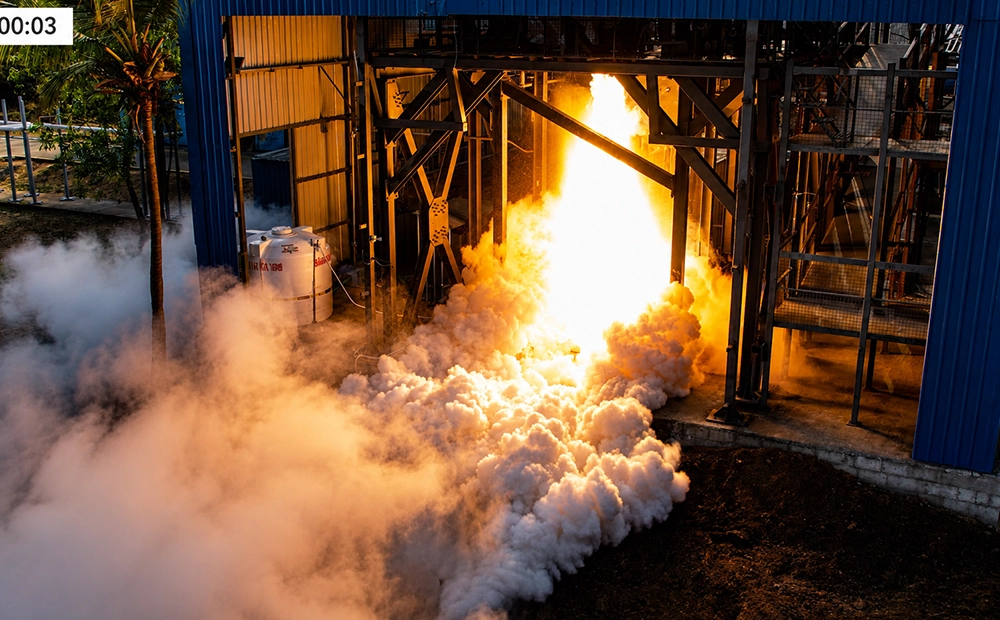
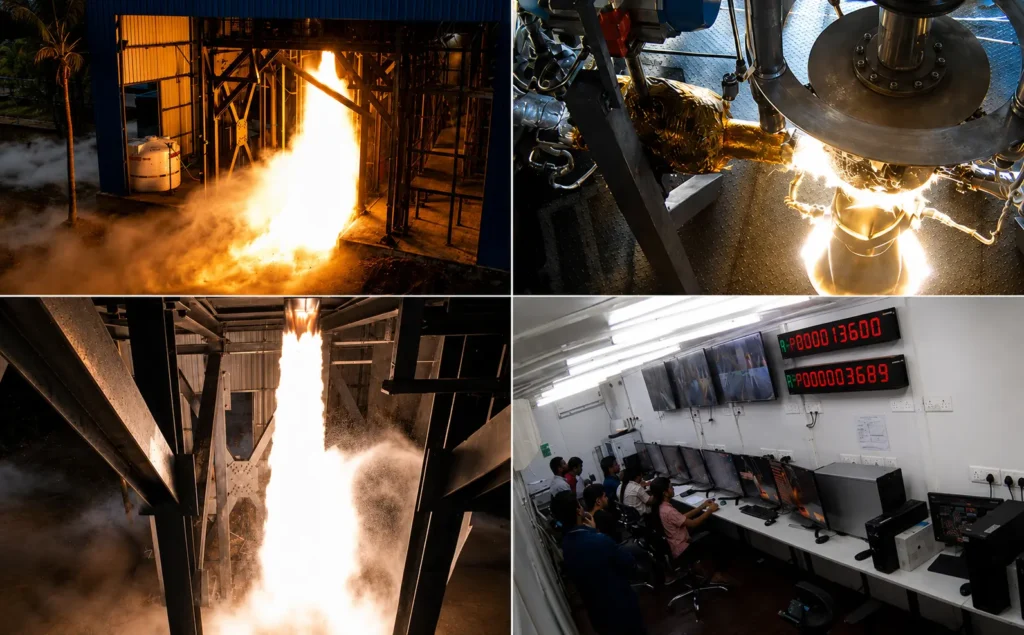
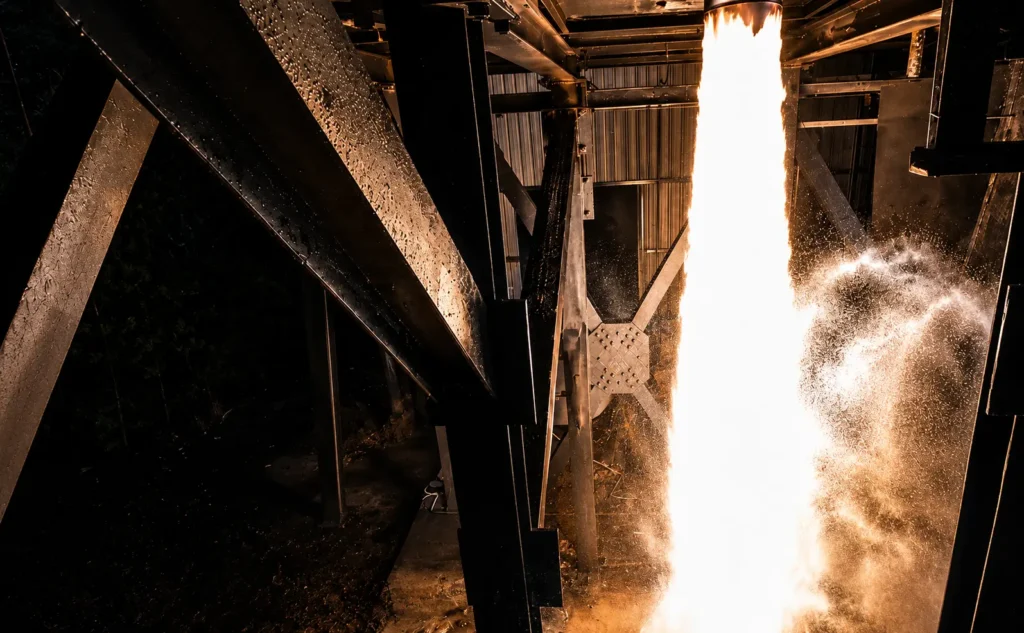
Agnikul performed a 77-second hot-fire test of the Agnite engine. A hot-fire test means the engine is fired under real operating conditions. Fuel and oxidizer flow through the engine, combustion happens, and engineers check whether the engine performs safely and consistently.
According to the reported test result, the engine completed the 77-second firing sequence successfully. The test was important because it checked repeatability. In aerospace, repeatability means the engine should not work only once. It should deliver stable performance again and again under similar conditions.
Reports also said that the pressure and temperature behaviour matched expectations from earlier trials. This is important because a rocket engine must maintain controlled combustion. If pressure, temperature, or flow behaviour becomes unstable, the engine can fail.
The exact public thrust output of the Agnite engine was not clearly disclosed in the available reports. So, the confirmed output from this test should be described as a successful 77-second hot-fire repeatability test, not as a publicly confirmed thrust number.
Why single-piece 3D printing matters
Traditional rocket engines are usually made from many separate parts. These parts may include chambers, injectors, pipes, cooling channels, seals, fasteners, and welded sections. Each part must be manufactured, inspected, joined, and tested.
This makes rocket engine production slow and complex. It also creates many possible failure points. A weld, joint, or connection can become a weak area if it is not manufactured perfectly.
Agnikul’s single-piece 3D-printed approach reduces this complexity. By printing the engine as an integrated structure, the company can reduce the number of joints and assembly steps. This can improve reliability, reduce production time, and simplify quality checks.
This is why single-piece additive manufacturing is becoming important in aerospace. It is not only about making a part. It is about changing the complete manufacturing method.
Electric pump-fed engine technology
Another important feature of Agnikul’s engine technology is the use of electric motor-driven pumps. Many traditional rocket engines use complex turbopump systems or gas-generator cycles to move fuel and oxidizer into the combustion chamber.
Electric pump-fed technology can reduce mechanical complexity. It can also allow better software-based control of the engine. This is useful for small launch vehicles because companies need reliable, flexible, and cost-effective engine systems.
The combination of electric pump-fed propulsion and 3D-printed engine manufacturing makes Agnikul’s approach different from many traditional rocket manufacturing methods.
Why Inconel is important
Inconel is a strong nickel-based alloy used in demanding industrial and aerospace applications. It is used because it can handle high heat, oxidation, pressure, and thermal stress better than many ordinary metals.
Rocket engines operate in extreme conditions. During firing, the combustion chamber faces very high temperature and pressure. The engine must survive these conditions without cracking, melting, or losing strength.
This is why material selection is very important in rocket engine manufacturing. By using Inconel and metal additive manufacturing, Agnikul is combining advanced material science with advanced production technology.
Faster rocket engine manufacturing
One of the biggest advantages of 3D printing is faster manufacturing. Traditional rocket engine production can take months because many parts must be machined, welded, assembled, inspected, and tested.
Additive manufacturing can reduce this timeline because complex internal shapes can be printed directly. Cooling channels, integrated flow paths, and complex geometries can be built inside the part during the printing process.
Reports have stated that Agnikul’s 3D printing process can significantly reduce engine production time. This matters because faster manufacturing allows more testing, faster design changes, and quicker preparation for future launch missions.
India’s growing private space industry
Agnikul Cosmos is part of India’s growing private space ecosystem. The company is incubated at IIT Madras and has been developing private launch technology for small satellite missions.
In 2024, Agnikul launched Agnibaan SOrTeD. This mission was important because it demonstrated a rocket powered by a single-piece 3D-printed engine. It also showed the progress of India’s private launch capability.
India’s private space industry is becoming more active as startups work on launch vehicles, satellites, propulsion systems, and manufacturing technologies. Agnikul’s work shows how additive manufacturing can become a major part of this growth.
Why this matters for 3D printing
The Agnite engine test is not only a space technology story. It is also a 3D printing industry story. It shows that additive manufacturing is moving from prototype use into mission-critical production.
Rocket engines are among the hardest components to manufacture. They require strong materials, complex cooling systems, accurate fuel flow, and reliable performance. If 3D printing can help produce rocket engines, it can also influence other high-performance industries.
The same manufacturing idea can support aerospace, defense, energy, aviation, automotive, and advanced industrial machines. This is why the Agnite test is important for anyone following the future of industrial 3D printing.
Future of Agnikul and Agnibaan
Agnikul’s long-term goal is to use the Agnibaan launch vehicle for small satellite launches. Small satellites are used for communication, earth observation, research, mapping, defense, and internet-based services.
The small satellite market needs flexible and affordable launch options. A customizable rocket with faster engine production can help serve this demand.
Agnikul is also expected to continue testing engine systems, manufacturing methods, and launch vehicle technologies. Future progress will depend on repeatable engine performance, launch reliability, regulatory approvals, and commercial demand.
Conclusion
The successful Agnite hot-fire test shows how 3D printing is changing modern aerospace manufacturing. Agnikul Cosmos is not only building rocket engines. The company is proving that additive manufacturing can reduce complexity, improve production speed, and support the next generation of space technology.
The success of this engine signals a future where rockets may be built faster, with fewer parts, and at lower cost using industrial 3D printing technology.
Reference links
The following sources were used to prepare this article:
- India Today – Agnikul Cosmos fires 3D-printed Agnite rocket engine in 77-second test
- The Times of India – Agnikul successfully tests 3D-printed Agnite booster engine
- Press Information Bureau – Agnikul launches rocket with fully 3D printed engine
- Press Information Bureau – TDB-DST support for Agnikul Cosmos and Agnibaan project
- Reuters – Agnikul launches India’s second privately built rocket
- Agnikul Cosmos – Agnibaan SOrTeD product information
Leave a Reply